The Lima family leads the way in Brazilian coffee production
Together with pioneering coffee farmers and local partners, GrowGrounds is transforming conventional coffee farms into more diverse and climate-resilient agroforestry systems in Brazil.
By GrowGrounds | September 2026
The Future of Coffee is Already Growing in Brazil
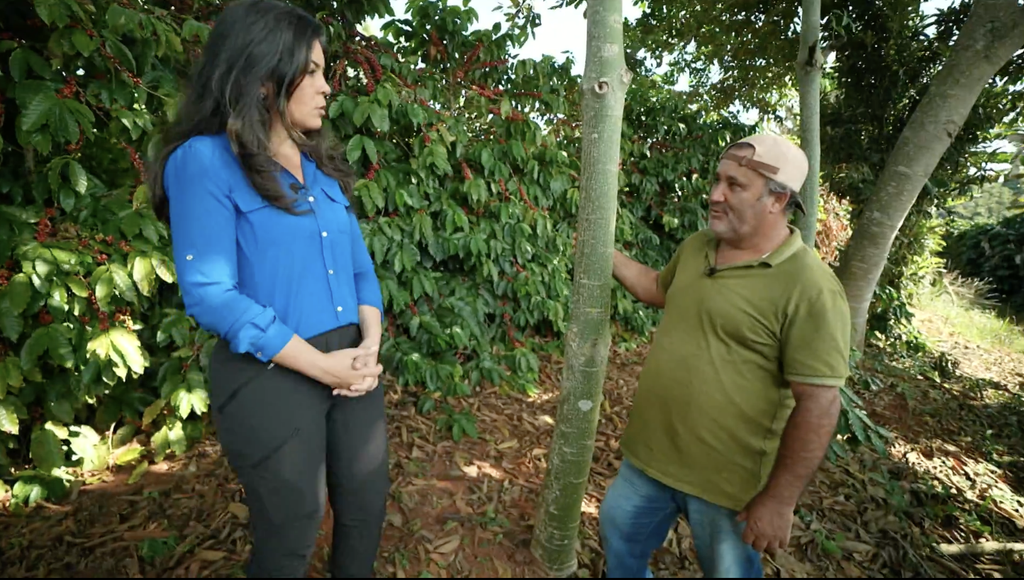
When the Lima family began growing coffee among trees, some people called them crazy. Today, their farm in Minas Gerais is among the first to advance this approach through GrowGrounds’ agroforestry pilot with our local implementation partner, Hanns R. Neumann Stiftung.
Now their experience has been featured by Globo Rural, one of Brazil’s most influential agricultural television programmes.
What started with farmers willing to challenge conventional coffee production is becoming part of a national conversation: how can we transform existing coffee farms into more diverse, productive and climate-resilient growing systems?
That is the GrowGrounds model – developed with farmers, implemented with strong local partners and designed to scale across the coffee sector.
Bringing Coffee Resilience to a National Audience
Broadcast by TV Globo since 1980, Globo Rural is one of Brazil’s most established sources of agricultural journalism.
Its 13-minute report explores how science, genetics and new farming practices can help coffee withstand extreme heat, drought and increasingly unpredictable weather.
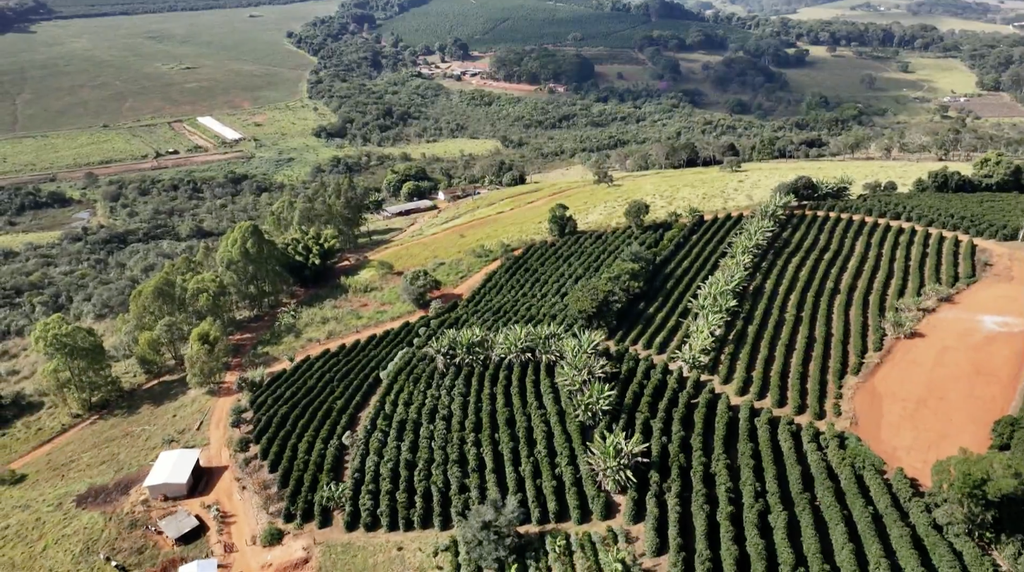
The Lima family grows approximately 18,000 Arabica coffee trees across 4.5 hectares. By integrating species including banana, orange, mahogany and Inga, they are creating shade, improving soil conditions, reducing erosion and developing additional sources of food and income.
The difference can already be experienced on the farm: healthier coffee plants and a cooler microclimate that helps protect the crop from heat, drought and frost.
Different Farms. The Same Climate Pressure
The programme also visits Fazenda Samambaia, a 900-hectare farm and member of Sancoffee, a cooperative of 20 specialty coffee producers.
Despite the difference in scale, the challenges are remarkably similar. Extreme weather has reduced yields and made harvesting, drying and quality management less predictable.
Fazenda Samambaia is responding with cover crops, adapted harvesting practices and trees that support natural pest and disease control.
From 4.5 to 900 hectares, the conclusion is clear: coffee farms need greater natural resilience.
A Model Designed to Scale
Agroforestry is not simply about planting trees. It requires farm-specific design, carefully selected species, farmer training, long-term management, monitoring and finance.
Done properly, it can improve soil health and water retention, reduce heat stress, strengthen biodiversity, create additional farmer income and remove carbon from the atmosphere.
The future of coffee cannot depend on pioneering farmers acting alone. Coffee companies, cooperatives, investors and implementation partners must help finance and scale the transition.
The solutions are already growing. Our task is to make them available to many more farmers.
Contact
| Lars Aaen Thøgersen | Christina Singh |
| CEO | COO – responsible Latin America |
| +45 21 44 17 20 | +45 41 76 07 44 |
| lars@growgrounds.org | christina@growgrounds.org |