Coffee agroforestry can turn Kenya’s restoration ambition into verified climate action
For years, carbon projects have been judged by scale: how many credits, how many trees, how many hectares. But that is no longer enough. Buyers, investors, regulators and communities are asking harder questions.
- How is carbon measured?
- Who benefits?
- How are farmers paid?
- Who owns the data?
- What happens if trees die?
- Can the claims be verified?
- And does the project actually improve the landscape?
This shift matters deeply for coffee.
Coffee is one of the world’s most climate-exposed crops. Rising temperatures, drought, degraded soils and unstable yields are already putting pressure on farmers and future supply. At the same time, coffee companies are under growing pressure to act to secure resilient sourcing, on scope 3 emissions, and to support better farmer livelihoods.
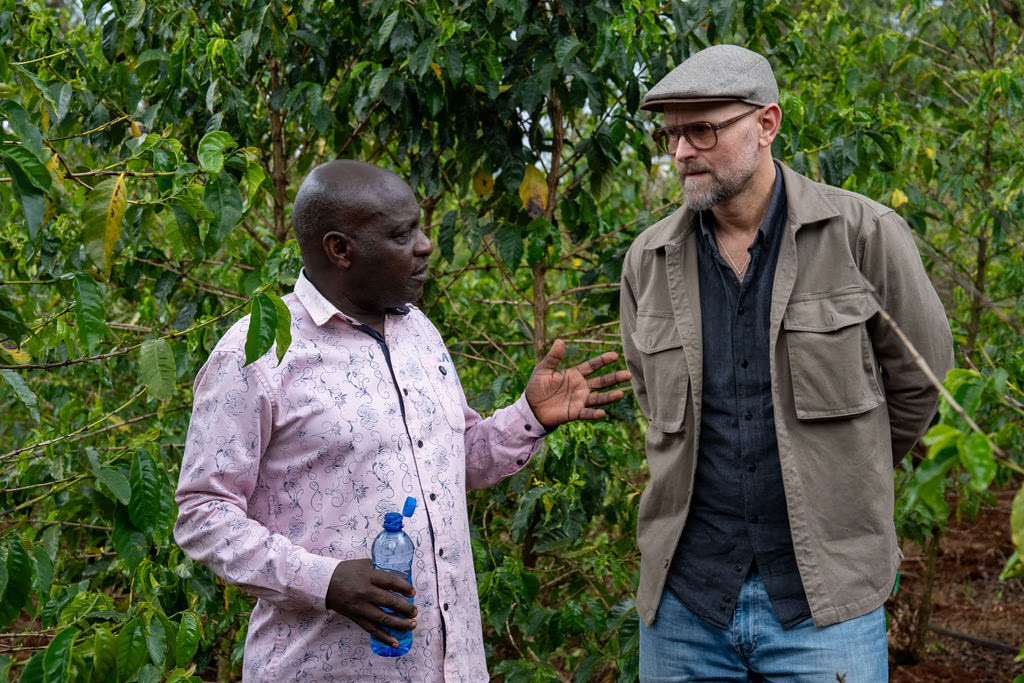
The answer is not about reporting.
The answer is investments in restoration of the landscapes coffee depends on. Investments that can be offered today with very attractive returns – for nature, for people, for business, and for financial investors.
Kenya’s restoration agenda is a signal to the market
Kenya has reaffirmed its commitment to restoring degraded ecosystems and planting 15 billion trees by 2032. This is not only an environmental ambition. It is a development agenda linked to food security, water, livelihoods, ecosystem resilience and local economic value.
That distinction is important.
Tree planting only becomes meaningful when trees are part of functioning landscapes. Restoration must improve soil, protect water, build shade, increase biodiversity and create value for the people living and farming on the land.
In coffee regions, this means moving beyond vulnerable monoculture systems and building productive agroforestry landscapes.
The future of carbon markets is integrity
The Africa Carbon Market Outlook 2026 describes a clear market shift: carbon markets are moving from expansion to discipline.
Issuing credits is no longer the same as creating trust. In the next phase of the market, value will be determined by governance, MRV, benefit-sharing, farmer consent, transparent data and credible verification.
This is good news.
It means the market is beginning to reward the kind of work that should always have mattered most: real field execution, farmer value, conservative carbon modelling and documented landscape change.
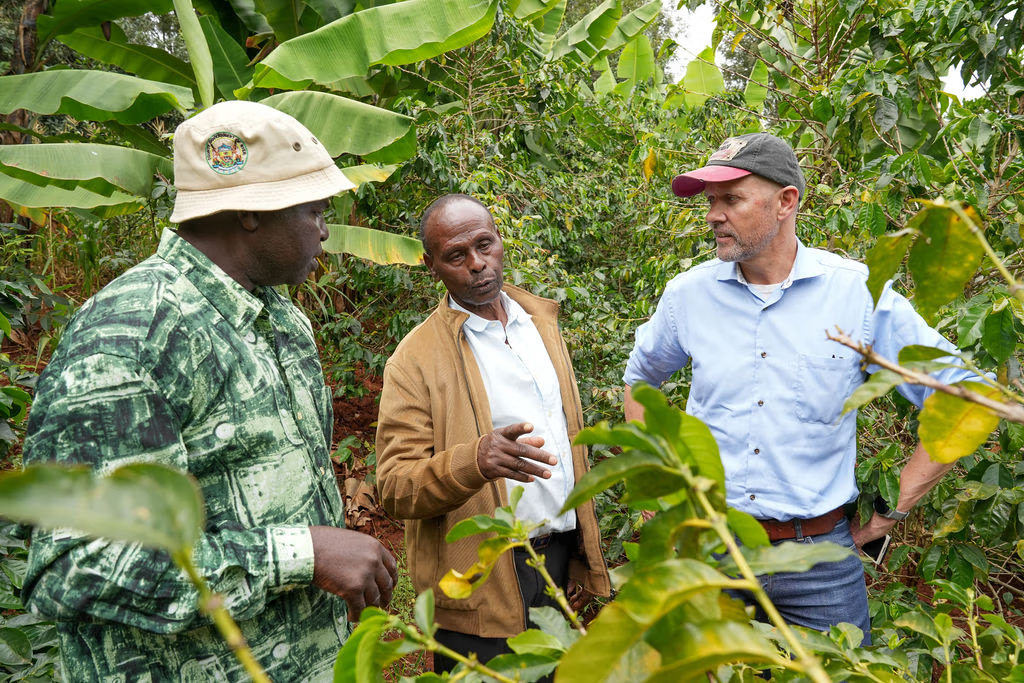
For Africa, the opportunity is not simply to generate more credits. The opportunity is to build carbon market systems that retain value locally, strengthen agricultural resilience and support long-term development.
For coffee, that opportunity is immediate.
Coffee agroforestry is not tree planting
At GrowGrounds, we do not see trees as isolated carbon assets. We see trees as part of a new coffee production system.
Our model is based on converting vulnerable coffee monocultures into productive agroforestry systems. This means integrating coffee with carefully selected trees and vegetation that improves shade, soil health, biodiversity, microclimate, water retention and long-term farm productivity.
Carbon finance is not the purpose of the system.
Carbon finance is the mechanism that makes the transition bankable.
That distinction matters. A weak carbon project starts with credits and works backwards. A strong restoration model starts with the farm, the farmer and the landscape. And then documents the climate value created over time.
From carbon credits to coffee supply chain resilience
Coffee companies are facing a structural challenge. They need to protect future supply, reduce climate impact, and support farmers in adapting to changing conditions.
Coffee agroforestry can address these challenges in one integrated model.
- It can help restore degraded land.
- It can improve farm resilience.
- It can support biodiversity.
- It can create shade and protect soil moisture.
- It can generate measurable carbon removals.
- It can strengthen farmer income.
- And it can connect climate action directly to the coffee value chain.
That is why productive restoration is not a side project for coffee companies. It is becoming part of future sourcing strategy.
Why Kenya matters for GrowGrounds
Kenya is one of the most important countries for the next phase of African carbon markets. It combines strong restoration ambition, growing carbon market readiness, international buyer familiarity and a clear need for climate-resilient agricultural transition.
For GrowGrounds, Kenya is not just a project location. It is a platform for showing how restoration, farmer income, carbon finance and coffee supply can be integrated into one verified model.
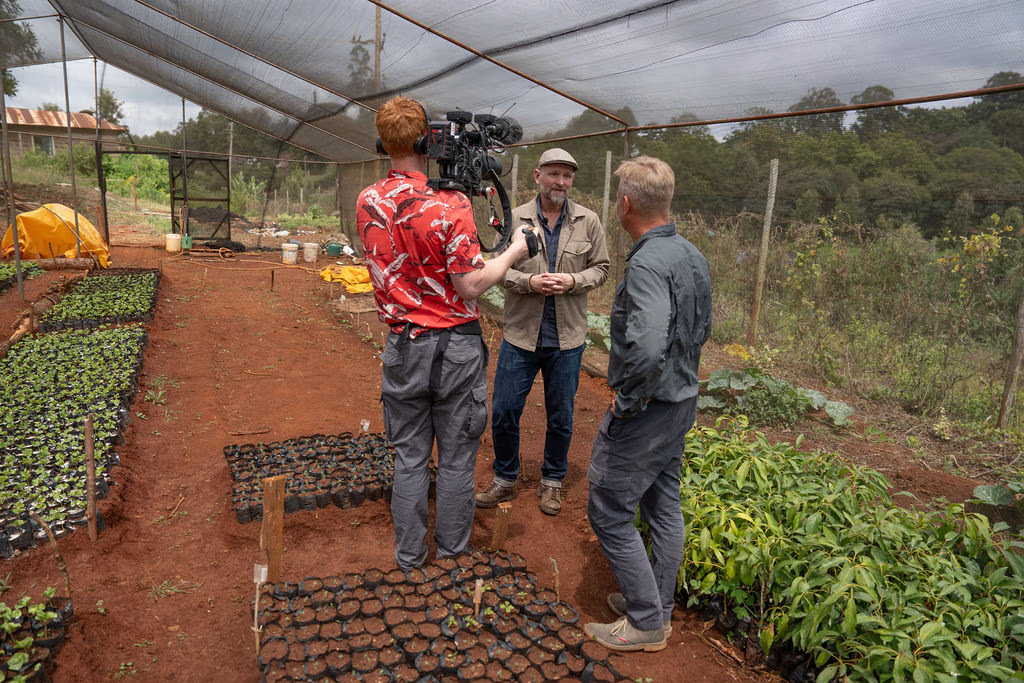
We are building directly in coffee landscapes, together with local partners and farmer organisations. The objective is not simply to plant trees. The objective is to help coffee farms become more resilient, more biodiverse, more productive and more investable.
Integrity is the business model
The GrowGrounds high-integrity carbon finance model answers a series of practical questions.
- How farms are mapped
- How farmers are onboarded
- How trees are monitored
- How carbon removals are calculated
- How payments are documented
- How claims are controlled
- How risk is managed
- How the farming system improves
These questions are not compliance details. They are the foundation of trust.
At GrowGrounds, this is why digital MRV, farmer-level mapping, transparent revenue sharing, field implementation, recognised certification pathways and disciplined claims guidance are built into the model.
From reducing to restoring
The coffee industry needs to move from reducing harm to actively restoring the landscapes it depends on. It needs to invest deeply in farmer-based transition. It needs to make nature a productive asset again.
Kenya’s restoration agenda shows that the direction is clear. Africa’s carbon market development shows that the standards are rising. Coffee’s climate challenge shows that the need is urgent.
The opportunity now is to connect all three.
At GrowGrounds, this is what we are here to do. We grow businesses by growing nature. And in Kenya’s coffee regions, that means turning restoration ambition into productive, verified coffee agroforestry. One farm, one farmer and one landscape at a time.
So, what can you do?
Are you a coffee company, investor or partner looking to turn climate ambition into verified restoration and resilient coffee supply?
Let’s talk about how coffee agroforestry can become part of your climate and sourcing strategy.
Links
- Citizen Digital article: DP Kindiki calls for restoration of degraded rangelands, commits to 15 billion tree drive
- Kenya Carbon Market update 2026 report: Kenyan carbon market 2026_acmo 10.pdf